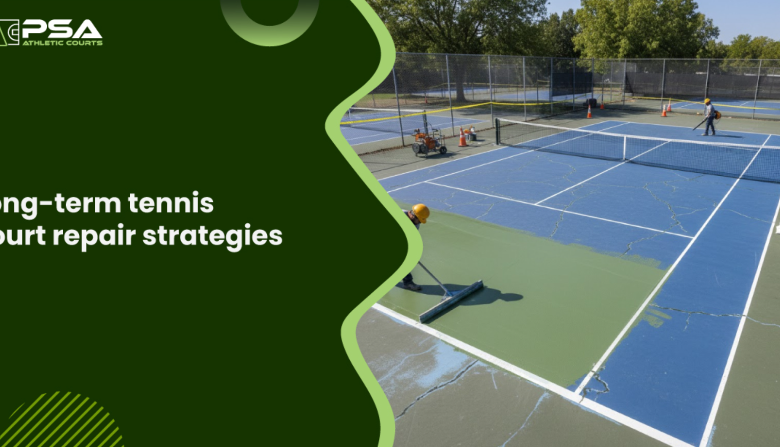
Tennis courts are constantly exposed to the elements. From freeze–thaw cycles and heavy rain to prolonged sun exposure, weather plays a major role in surface deterioration. One of the most common and frustrating issues court owners face is cracking. If left untreated, small cracks can expand, affect playability, and lead to costly resurfacing sooner than expected.
Understanding the right approach to tennis court crack repair is essential for extending the life of your court and maintaining consistent performance. This guide explains how weather causes cracks, which repair solutions last the longest, and when professional intervention becomes necessary.
How Weather Causes Tennis Court Cracks
Weather-related stress is the leading cause of cracks in tennis courts, especially in regions with seasonal temperature changes.
- Freeze-thaw cycles cause moisture to seep into the surface, expand when frozen, and widen existing cracks
- Heavy rainfall and poor drainage weaken the court base over time
- UV exposure dries out surfaces, making them brittle and more prone to cracking
Without proper tennis court repair, these conditions can quickly turn hairline fractures into structural damage.


Why Timely Tennis Court Crack Repair Matters
Ignoring cracks doesn’t just affect appearance it directly impacts safety and performance. Uneven surfaces can cause unpredictable ball bounce and increase the risk of player injuries.
Timely tennis court crack repair:
- Prevents cracks from spreading
- Protects the court base
- Reduces long-term maintenance costs
- Extends the lifespan of the surface
Experienced providers like Pine State Courts emphasize early intervention to avoid full resurfacing before it’s truly necessary.
Types of Tennis Court Cracks and What They Mean
Not all cracks are the same, and identifying the type helps determine the right repair solution.
Surface (Hairline) Cracks
These are shallow cracks limited to the top layer of the court. They are often caused by UV exposure and surface aging and can usually be addressed with proper crack filling and sealing.
Structural Cracks
Wider or recurring cracks often indicate base movement or drainage issues. These require more advanced tennis court repair techniques to prevent them from reappearing.
A professional tennis court designer can assess whether cracks are cosmetic or structural before recommending repairs.
See also: The Structure of Success: Daily Life and Rules in a Sober Living Environment
Repair Solutions That Actually Last
High-Quality Tennis Court Crack Filler
Using the right tennis court crack filler is critical. Flexible, acrylic-based fillers move with the court surface, reducing the likelihood of cracks reopening due to temperature changes.
This method is effective for minor to moderate cracking when applied correctly and followed by surface sealing.
Crack Routing and Patching
For deeper or wider cracks, routing (cleaning and widening the crack) before filling ensures better adhesion and durability. This approach creates a stronger bond and longer-lasting results.
Localized Resurfacing
When cracking is widespread but the base remains intact, partial resurfacing may be the most effective solution. This restores playability without the cost of full resurfacing.
Resources like expert guidance on how to fix tennis court cracks can help owners understand when simple repairs are sufficient and when larger interventions are needed.
When Repairs Are No Longer Enough
If cracks continue to return despite repeated repairs, it may be a sign that resurfacing is the better long-term option. Ongoing cracking often indicates deeper structural issues that fillers alone can’t resolve.
Professionals such as Pine State Courts often recommend evaluating resurfacing solutions when cracks compromise performance or safety. Understanding the transition from repairs to resurfacing helps prevent wasted spending on short-term fixes.
Preventing Future Cracks
While weather can’t be controlled, proactive maintenance can significantly reduce cracking:
- Ensure proper drainage around the court
- Seal the surface regularly to prevent moisture penetration
- Address small cracks early with appropriate tennis court crack repair methods
- Schedule professional inspections to catch underlying issues
Exploring long-term resurfacing and maintenance strategies can also help court owners plan ahead and protect their investment.
Why Professional Assessment Makes a Difference
DIY repairs may temporarily hide cracks, but improper materials or techniques often cause issues to resurface quickly. Working with experienced professionals ensures the right repair method is used for the specific type of damage.
Teams like Pine State Courts, with experience across a wide range of tennis court projects, focus on durable solutions rather than quick cosmetic fixes.
Final Thoughts
Weather damage is unavoidable, but long-lasting solutions are possible with the right approach. Effective tennis court crack repair depends on early detection, proper materials, and professional evaluation. Whether using a high-quality tennis court crack filler or considering resurfacing, addressing cracks correctly protects both performance and safety.
By investing in reliable tennis court repair solutions and working with experienced specialists, court owners can extend surface life, reduce maintenance costs, and ensure consistent play for years to come.