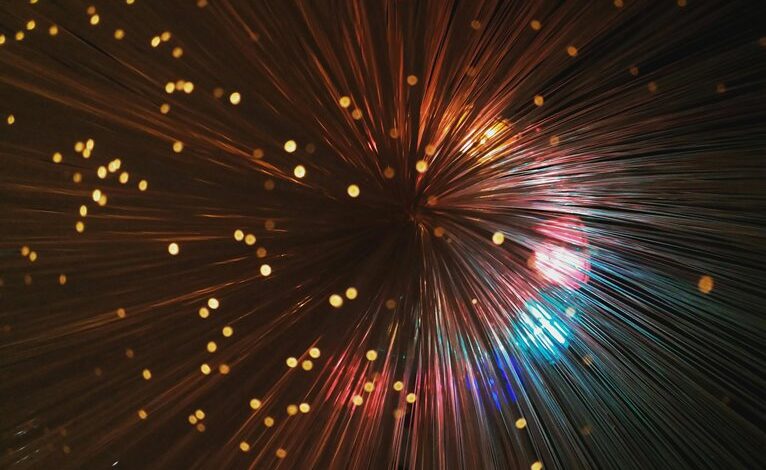
Cosmic Beam 656121146 Dynamics examines the propagation of a high-energy, collimated particle stream through interstellar space. It assesses energy loss profiles, density perturbations, and stability under varying field strengths. Magnetic fields impose gyration, pitch-angle scattering, and adiabatic changes that set characteristic timescales. Attenuation and scattering by ambient media produce spectral shifts and confinement effects. The interplay raises questions about acceleration sites and intervening media, inviting scrutiny of observational diagnostics that may hinge on nuanced environmental conditions.
What Is Cosmic Beam 656121146 Dynamics?
Cosmic Beam 656121146 Dynamics refers to the behavior and evolution of a high-energy, collimated particle stream as it propagates through space and interacts with ambient media and fields. The analysis quantifies trajectory, energy loss, and density perturbations, revealing stable patterns in the cosmic beam under varied conditions.
Magnetic fields influence evolution, guiding deflection and shaping transmitted dynamics with measurable precision.
Cosmic beam, dynamics; Magnetic fields, evolution.


How Do Cosmic Beams Evolve in Magnetic Fields?
Magnetic fields shape cosmic beams through a combination of deflection, confinement, and energy exchange, producing measurable alterations in trajectory and spectrum. Beams evolution proceeds via pitch-angle scattering, gyromotion, and adiabatic energy changes, with field gradients setting characteristic timescales. Magnetic shaping constrains cross-field diffusion, revealing spectral hardening or softening. Quantitative diagnostics track divergence, coherence, and energy flux, enabling disciplined, freedom-loving interpretation.
Interstellar Environments That Shape Beams
Interstellar environments imprint beams through a combination of density, composition, and flow, shaping propagation via scattering, absorption, and Doppler effects. In observational terms, column densities alter attenuation, and anisotropies modulate angular distribution.
Quantitatively, dust-to-gas ratios and ionization fractions set transmission fractions and spectral shifts. cosmic cream, stellar fluxes, constrain flux conservation and energy partitioning within defined beam cross-sections.
Observable Signatures and Implications for Astrophysics
Observable signatures of beam dynamics manifest as measurable flux and spectral variations along with angular and temporal patterns that constrain underlying physical processes.
Quantitative analyses reveal flux fluctuations at percent levels and spectral indices shifting with geometry, enabling constraints on acceleration sites and intervening media.
Implications touch dark energy contributions to propagation, and gamma rays offer direct tracers of beam interactions and energetics.
Conclusion
In the loom of space, the beam behaves as a tempered thread—neither frayed nor slack, yet braided by fields and media. Its energy wanes like a fading dye, while pitch-angle scatter stitches a widening sheath. Gyromotion marks a measured cadence; adiabatic shifts echo a patient clock. Across varied winds, the pattern persists: a quantifiable rhythm of attenuation, deflection, and spectral drift, revealing sites of acceleration and the medium’s hidden structure.