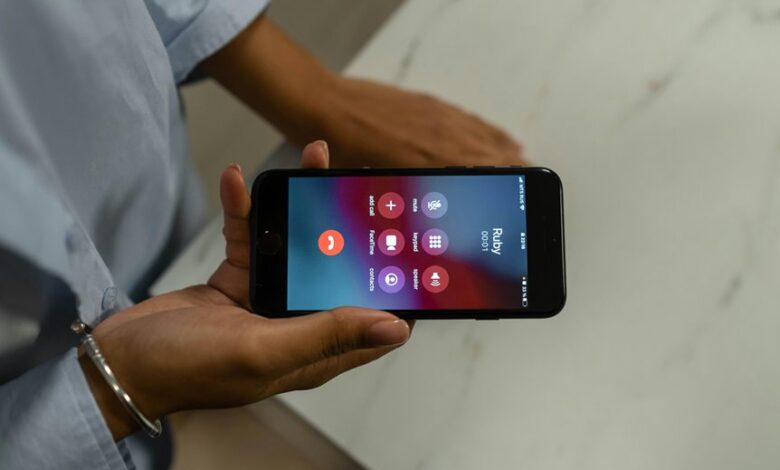
Insight Engine Start 832-696-0883 presents a framework for verified caller signals, focusing on objective indicators and cross-source corroboration. The critique examines generation, validation, and reproducibility, while noting potential biases and privacy trade-offs. Early results claim reduced spam and higher trust, yet questions remain about scalability and interoperability. The discussion leaves a hinge point: can these signals be trusted at scale without compromising user autonomy or signal usefulness?
What Are Verified Caller Signals?
Verified caller signals are objective indicators used to assess the authenticity and reliability of telephone calls.
The concept centers on identifying patterns that distinguish legitimate communications from deceit.
Unsolicited callers are tempered by verification protocols, which impose checks without surrendering autonomy.


Analysts scrutinize metadata, timing, and caller behavior, seeking reproducible evidence while resisting overgeneralization or censorship in the pursuit of informed self-determination.
How They Get Generated and Verified
How are verified caller signals produced and validated in practice? The process hinges on automated data aggregation, pattern analysis, and cross-source corroboration. Insight mining combines disparate telephony signals into a cohesive feature set, while signal validation tests consistency, provenance, and anomaly detection. Skeptics note potential biases, data gaps, and false positives, demanding transparent methodologies before trusting generated signals for decision-making.
Real-World Impact: Reducing Spam and Boosting Trust
Real-world deployments of caller signal verification aim to curtail spam and elevate caller trust by systematically filtering dubious interactions and annotating legitimate ones.
The approach is methodical yet contested, prioritizing reducing false positives while preserving useful signals.
Critics question overreach and mislabeling risk, arguing that transparency and interoperability must accompany boosting user trust without sacrificing freedoms or creating centralized control.
Implementing Verified Signals: Quick Wins for Teams
Implementing verified signals can yield rapid efficiency gains for teams by prioritizing low-friction, high-impact actions that demonstrate tangible improvements in accuracy and user experience.
The analysis remains skeptical yet clear: what are signals, how to verify; practical criteria guide adoption.
Caller signals generation emerges as a minimal, auditable loop, supporting a trust boost while avoiding bloated workflows and vague promises.
Conclusion
In summary, verified caller signals offer a structured, data-driven approach to discerning authenticity, combining automated signals with cross-source corroboration. The method emphasizes reproducible validation, transparency, and auditable loops, aiming to curb spam while preserving useful signals. Yet skepticism remains warranted: performance hinges on signal quality and integration fidelity across ecosystems. If implemented with disciplined governance and measurable benchmarks, the approach could meaningfully raise caller trust—potentially the holy grail of telecommunication credibility, a game-changer, to say the least.